
There are companies which can organise a viewing trip to Spain for you, but if you prefer doing things on your own, this quick guide will help you arrange everything you need to see as many Spanish properties as you can and perhaps even find the one.
Find properties online
Use online property portals such as Rightmove or Zoopla and their overseas sections, or try Spanish ones such as Fotocasa, Idealista or Pisos.com to identify properties of interest If you know where you want to buy and what sort of property you’re after, you can simply try Google search, using for example ‘house for sale in…’ or ‘chalet en venta en…’ as your search terms.
Save the ads
Save links to ads either as favourites or copy and paste into a Word document. You will find out that some properties are listed by multiple agents. Save all the ads – you will decide which agent to contact at a later stage. Compare descriptions (if they’re in Spanish and you don’t know the language, Google Translate should be able to give you at least some idea) to find out as much as possible about the property. If you’re unsure about anything, email the agent. They’re usually very quick to respond. You can also determine this way if the property is still available.
Pick and choose
Don’t get carried away and try to see everything that vaguely meets your requirements. I find it impossible to view more than 8-10 properties a day, so for a two-day trip I’d carefully select up to 12. Remember that your agent(s) will show you a few more than you asked for anyway.
On the other hand, you can’t just set your heart on one property. It may be unavailable (already sold or ‘reserved’) or it might have other flaws not immediately obvious from the images or the description. Have some solid back up to avoid disappointment.
Do your research
Spanish property ads very often either give you an exact address of the property or specify an area where it is. Use Google Maps to get a better idea of the location – both the street view and the satellite view are very helpful in identifying potential issues. This will help you select only the properties that you actually may consider buying.
Book your travel and accommodation
I usually start with skyscanner to identify cheapest tickets via monthly view. If you’re only going to Spain for a couple of days, avoid booking your travel around Spanish national and regional holidays. Some agents will work on some of these days, some will not, but you may also find that accommodation is more expensive around the ‘vacaciones’.
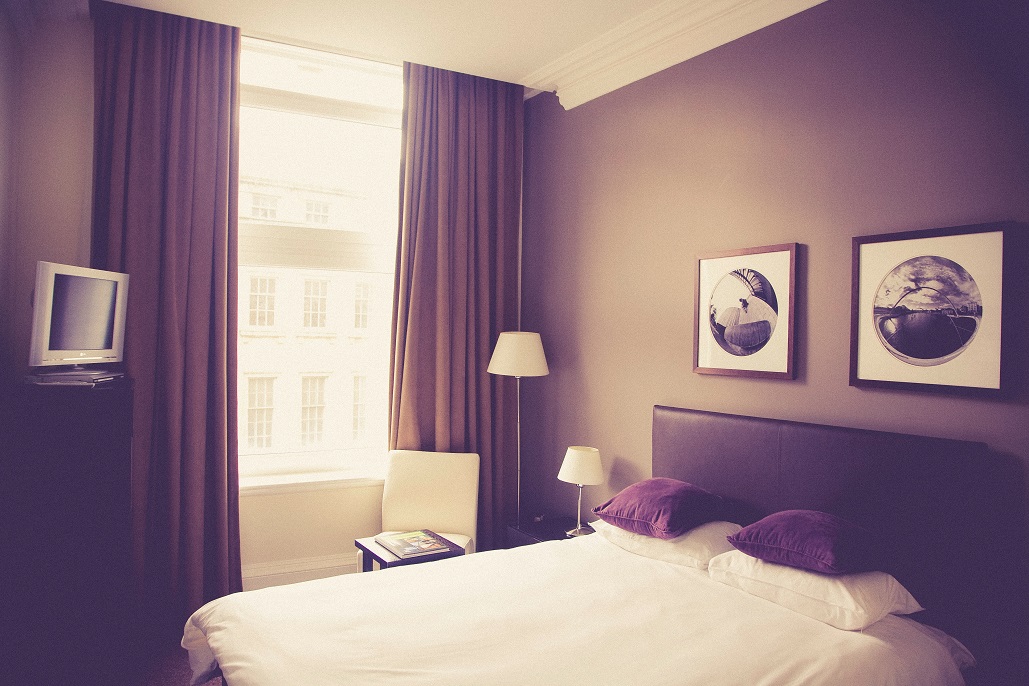
For short trips, I find booking a room in a hotel rather than via Airbnb, or a similar service, a more hassle-free option as you don’t need to make arrangements for checking in and you can basically turn up whenever you want (within a reason). I usually use Trivago, but often end up booking directly with a hotel as there are sometimes better rooms to choose from for comparable prices.
If a hotel is not an option because you want to have access to a kitchen or there are no decent hotels in the area, Airbnb, Owners Direct or Booking.com offer plenty of choice. Sometimes a property might be listed on multiple platforms, but the prices differ. So, again, do your research to avoid being overcharged.

Contact estate agent(s)
Once you’ve booked your travel, make a list of your properties by estate agent to see if there are any that have more than one of your selected properties on their books. It doesn’t make sense to make an appointment to see only one property with an agent if another agent can show you the same property plus several others that interest you.
Identify viewing slots
Divide your days into viewing slots depending on the number of agents and the properties identified (e.g. 10-12, 1-2 etc). Don’t forget that Spaniards usually take a lunch break between 2 and 4-5 pm and then work until the evening, so plan your viewings accordingly. If your search area is quite large, it makes sense to focus on one place at a time (e.g. dedicating one day to one area) to avoid travelling to and fro.
Make appointments
Contact estate agents suggesting dates and viewing times. Keep track of all your communication as otherwise you may find it difficult to stay on top of things. I usually note down the result of every email I send and receive. I find Spanish estate agents very accommodating, but sometimes you’d need to re-arrange some viewings to make sure that you see all the properties you want to, so having all your appointment details in one place helps.
You will usually meet an agent in their office but you can also arrange to meet at the property or somewhere close to the property if it’s more convenient. Check if you have enough time between viewings to get to a meeting point without hurrying.
View the properties
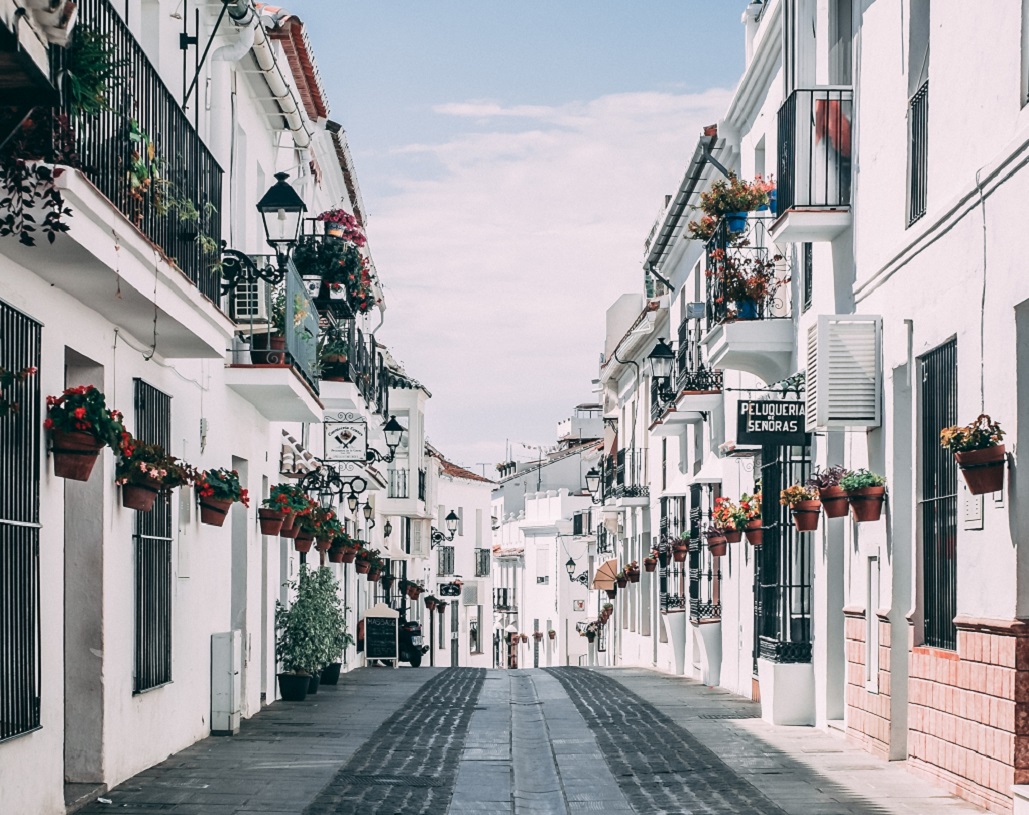
Talking from experience, unlike some UK estate agents, agents in Spain are usually very punctual, so try not to be late. Let them know if you’re delayed on the day – I found out that What’sApp is the messenger of choice, but equally you can use email or simply call.
If you meet an estate agent in their office, you will usually talk about your requirements in more detail. The agent will suggest a few more properties to view than you originally asked for. Be frank if you don’t think a particular property is for you. You don’t want to waste time.
Your agent can usually take you to the property in their car, but, if you prefer, you can follow them in yours (if you have one at your disposal). The latter option makes sense if there’s no particular reason for you to get back to the area where the office is located. The former one is more convenient as you can focus on the surroundings. It also gives you a chance to talk to your agent about the area or the property in detail.
 SPAIN SUNNY SIDE UP